We are often asked to review strategy.
Boards want confidence ,Executives want clarity ,Teams need direction.
All fair ,but here is what I have learned.
Strategy is not where most organisations fall short - its alignment.
There are many strategy frameworks but a few years back i came across the 7S framework, developed at McKinsey & Company, and tit remains useful because it forces a simple discipline.
Seven elements must align:
Strategy
Structure
Systems
Shared Values
Style
Staff
Skills
Three are considered “hard” and Four are “soft”.
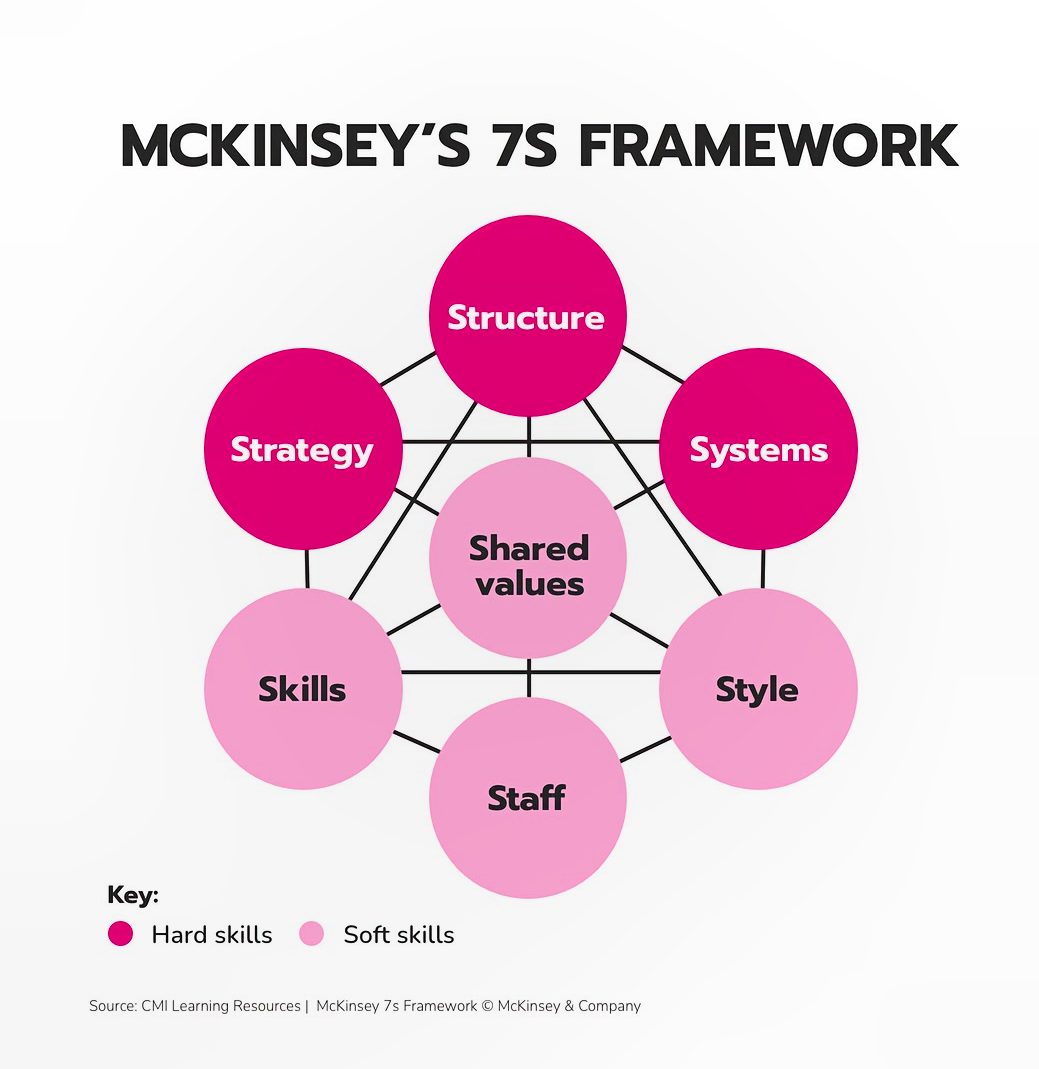
The distinction is not academic - It clarifies roles.
The Hard Elements: Where Boards Must Lead
Strategy. Structure. Systems.
These are governance territory and as boards we collaborate on them ,we debate them ,we sign them off.
We approve:
Strategic direction
Organisational design
Risk appetite
Financial frameworks
Delegated authorities
Performance architecture
We set the scaffolding ,we determine how the organisation is meant to function.
If the strategy is unclear, that is a Board issue or if the structure diffuses accountability, that is a Board issue.
If the systems cannot provide clean financial visibility, that is a Board issue.
These elements are visible and they are documented.
They sit in board packs and committee papers butt approving them is not the same as delivering them.
That responsibility sits elsewhere.
Strategy. Structure. Systems.
The Soft Elements: Where Executives deliver -
Shared Values. Style. Staff. Skills.
These live in daily leadership behaviour.
We model the values when pressure rises.
We set the tone on performance.
We recruit for capability, not comfort.
We build commercial skill.
We step in early when standards slip.
You cannot pass a resolution to change culture.
You change it through behaviour.
Culture lives in the small choices.
Who you promote.
How you respond to weak margin.
Whether performance conversations are honest.
How you frame risk.
Whether trading confidence feels grounded or performative.
If your strategy calls for greater self-sufficiency, you must build pricing capability.
If the Board expects contribution growth, you must embed margin discipline.
If you approve a leaner structure, you must equip people to operate within it.
The hard elements set the frame. The soft elements decide whether it stands.

Shared Values. Style. Staff. Skills.
Where the Tension Often Sits
In cultural organisations, we often see a subtle drift.
Boards approve a commercial strategy.
They endorse income diversification ,they agree to clearer financial targets.
But they remain uneasy with the consequences.
Performance becomes uncomfortable ,risk conversations soften or commercial language feels foreign.
At the same time, executives attempt delivery.
Yet:
Skills gaps remain unaddressed
Systems do not show contribution clearly
Leadership style avoids direct challenge
Recruitment decisions preserve familiarity rather than build capability
Neither side is negligent but the elements can get misaligned.
Boards approve hard change ,Executives struggle to shift the soft reality.
That gap is where delivery slows.
The discipline sits on both sides of the table.
As trustees, we must ask ourselves whether financial stewardship is truly explicit within oour stated values; whether the structure we have approved supports pace and accountability; whether our systems give the executive the visibility required to lead; and whether our risk appetite is defined clearly enough to allow confident delivery rather than cautious drift.
As executives, we must hold an equally hard mirror up to ourselves. Does our behaviour match the strategy the Board has signed off? Are we building the commercial capability the model now demands? Are we tolerating underperformance because challenge feels culturally uncomfortable? Are we recruiting for the future model rather than preserving the past? Governance does not sit at a distance from culture. It shapes it through every decision, incentive and signal. And culture, if left unattended, will quietly erode governance from within.
The Clear Line of Accountability
Boards must collaborate and sign off the hard elements.
We define direction. we guard the architecture. We set the boundaries within which risk is taken and capital is deployed.
Executives then deliver through the so-called soft elements. We translate intent into behaviour, capability and standards. We turn strategic choice into operating discipline. When this relationship works, strategy is clear, accountability is understood, performance data is trusted, and culture reinforces ambition rather than diluting it.
When it falters, strategy becomes rhetorical, delivery feels strained, and frustration grows quietly on both sides of the table. The remedy is not another away day or a thicker strategy document. It is tighter alignment between what you approve and how we behave.

We define direction…
Let me close simply.
This is about stewardship ,Boards set the direction. ,Executives bring it to life.
Hard elements give clarity ,Soft elements give credibility and WE need both.
In this climate, cultural leadership demands discipline.
Be clear on risk ,be honest about margin ,build the skills you require.
Model the standards you expect.
Alignment is not abstract.
It shows up in meetings.
In recruitment.
In how you respond when performance dips.
When governance and management move together, progress accelerates.
When they do not, strategy stalls.
You have the privilege of leading organisations that matter.
Hold mission and margin with equal seriousness.
Set the frame ,Live the standards and bloody back each other.
This is how we can build institutions that endure.
