I went to Ibai with a simple mindset. Turn up, eat well, pay attention. No overthinking.
Arrival
You can tell a lot in the first thirty seconds.
We walked in to a full room. Properly full. The kind of busy that tests a place. There was a slight pause at the door, a bit of checking and rechecking, then we were in. Nothing major, but you could feel the pressure straight away.
That moment matters. It sets the tone. It tells you whether the place is leading the service or reacting to it.
The room
Once seated, the room settles you. It’s calm, or at least it tries to be. Clean lines, proper spacing, no fuss. It feels like a place that’s made decisions. I like that. Too many restaurants try to cover every base and end up saying nothing. Here, you know what you’re getting. It’s confident without shouting about it.
There’s a discipline to it. You can see it in how the tables are set, how the space is used, how the team move.
Even on a busy night, that underlying structure holds.
The food
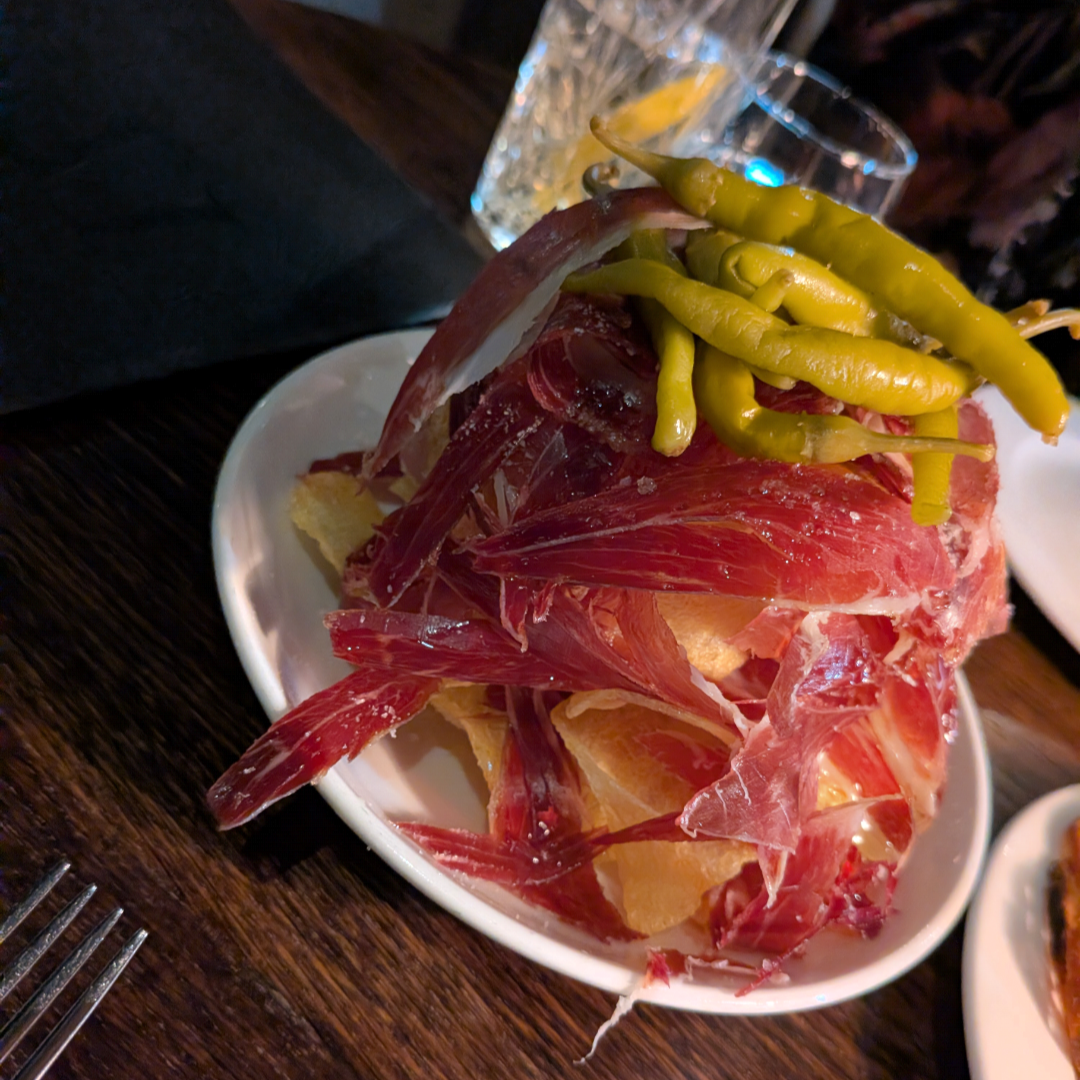
We kept it tight and shared a few plates. Everything that came out had a purpose. Beef tartare with smoked Espelette pepper set the tone. Clean, balanced, sharp where it needed to be. Nothing hidden, nothing overworked. Then La Noir de Bigorre ham with crisps and smoked piparra peppers. Salty, punchy, proper texture. It did exactly what it should.
This is cooking that trusts itself. It doesn’t chase attention. It just delivers.
The standout
Then came the main event. Galician Blond beef from Xose Portas in Pontevedra. I’ll say it straight — it’s the best cut of beef I’ve ever eaten. Cooked bang on, rested properly, and left alone. No messing, no distraction. Just quality and confidence on a plate. You don’t interfere with beef like that. You respect it. And they did.
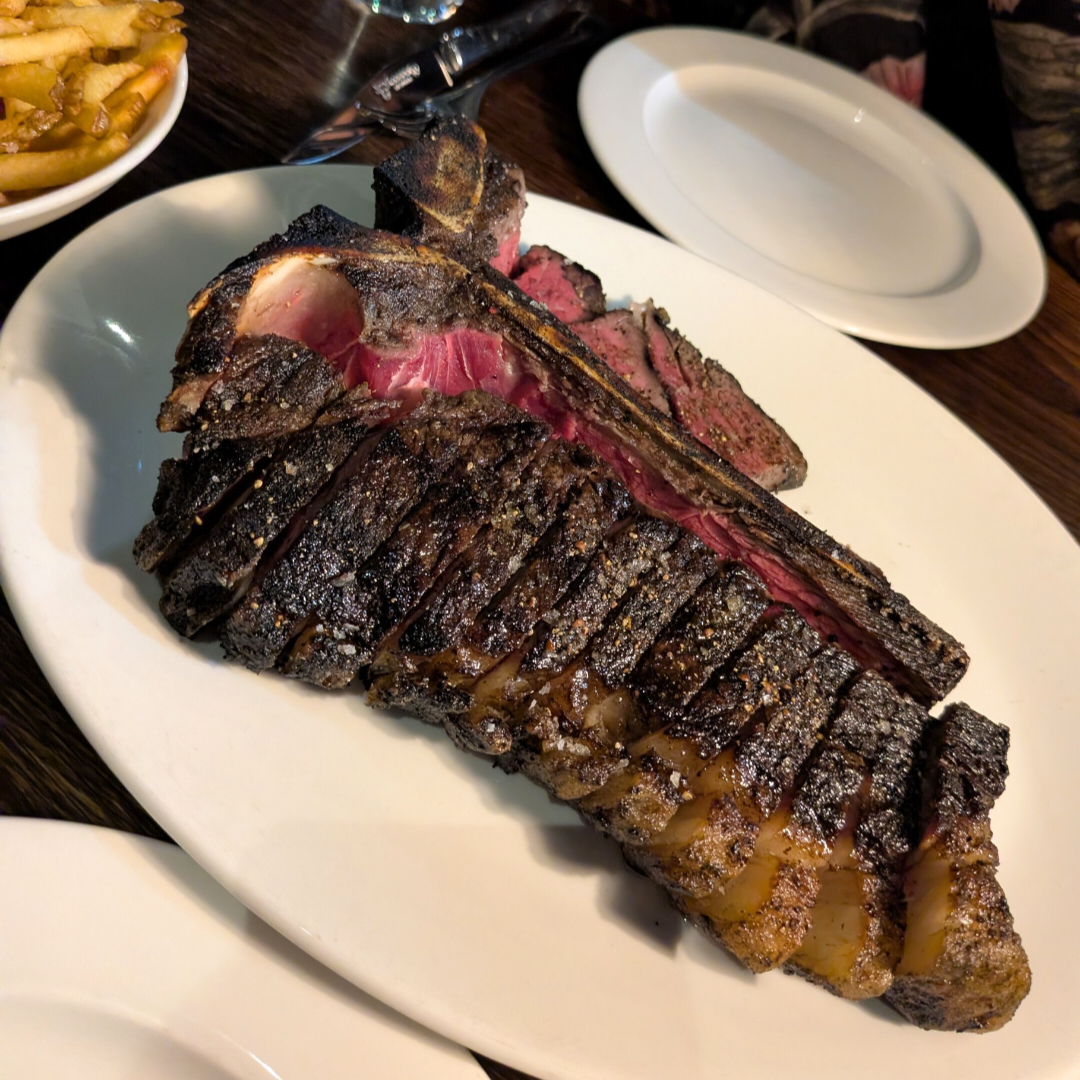
It’s rare you eat something and immediately know you’ll remember it. This was one of those moments.
The detail
Around it, the details held up. A simple green salad that cut through the richness. Beef fat French fries that were crisp, hot, and exactly what you want them to be. Then a sauce — Ossau-Iraty and black pepper — that pulled everything together without trying to steal the show.
Even the drinks played their part. Nothing showy, just well chosen and well timed. It all added to a meal that felt considered rather than constructed.
The service — the honest bit
Now, the honest bit. The service was a wee bit chaotic, and you could see why. The place was full and the pressure was on. Timing slipped here and there, a couple of waits stretched longer than you’d want, and at points it felt like the team were chasing the room rather than controlling it. Not through lack of care, just volume. Good people, working hard, slightly out of sync.
You could see the intent, but you could also see the strain.
The family expert …
Why it matters
And we’ve all been there. Busy nights don’t create problems, they expose them. When the food is that strong, the service has to hold it. It doesn’t need to be perfect, but it needs to be consistent. Because the guest doesn’t separate it out. They don’t score food and service differently. They feel one thing, and that’s the experience.
That’s the bit leaders sometimes miss. You can’t rely on great product to carry inconsistent delivery. It works for a while, then it doesn’t.
What I respected
What I respected was the intent. Even under pressure, the tone stayed warm. No one hid. No attitude crept in. That tells you a lot about the culture in the room. You can’t fake that when you’re under the cosh.
There’s a base here that’s strong. You can see it. It just needs tightening when demand peaks.
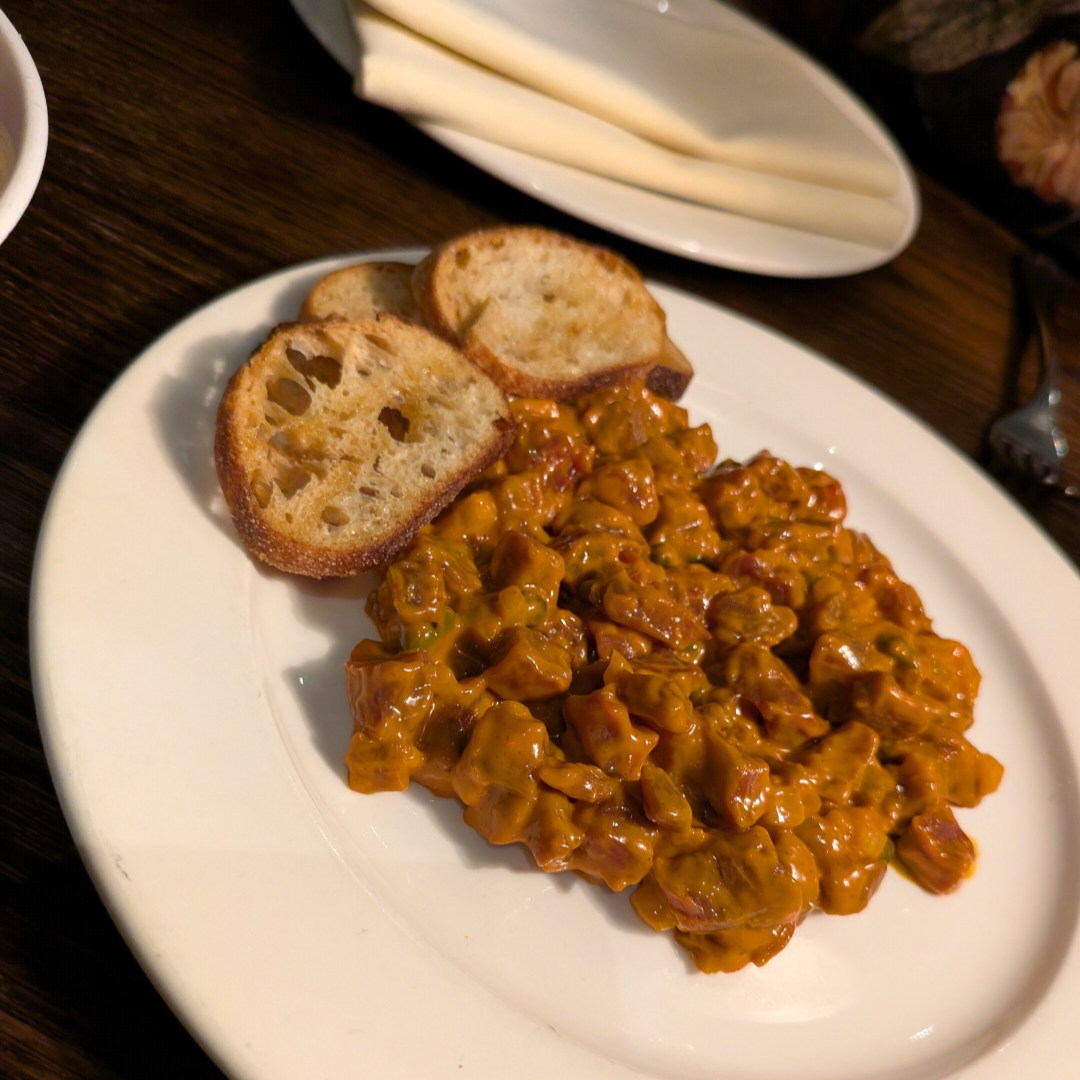
Beef tartare with smoked Espelette pepper
The lesson
I sat there thinking about my own world. Museums, Galleries, visitor spaces. Different setting, same reality. When it’s busy, that’s your test. Not a quiet midweek afternoon when everything ticks along nicely, but a packed room when demand is high and expectations are higher. That’s when you find out if your standards are real or just something written down.
We see it all the time. A great exhibition opens, footfall spikes, and suddenly queues stretch, service slows, and the experience dips. Not because people don’t care, but because the system wasn’t built for that level of demand.
So the question is simple. What happens in your operation when it’s full? Do standards hold, or do they drift? And have you designed for that moment, or are you hoping it works itself out?
In closing …
Ibai gets a lot right. The clarity of the offer, the quality of the food, the confidence to keep things simple. That’s why it works. That’s why that piece of beef stays with you.
Tighten the service under pressure and it moves from very good to properly special.
I left impressed. Not just because the food was excellent, but because it reinforced something simple. You don’t need to do loads. You need to do the right things properly, every time, even when it’s busy.
That’s the standard.
