Going in Style…
I do not separate leadership from operations.
I never have ,Too often, leadership is talked about as vision.
Operations are talked about as delivery.
That split causes problems.
Because your leadership is not what you say in a room.
It is what people experience on the floor.
Every day ,In our sector, that gap shows up quickly.
You can have a strong mission and you can have a well-written strategy.
But if the operation feels unclear, inconsistent, or reactive, none of that lands.
Visitors feel it. ,Staff feel it and your Income reflects it.
So I start with a simple test:
Does your operation look like the leadership you believe you are providing?
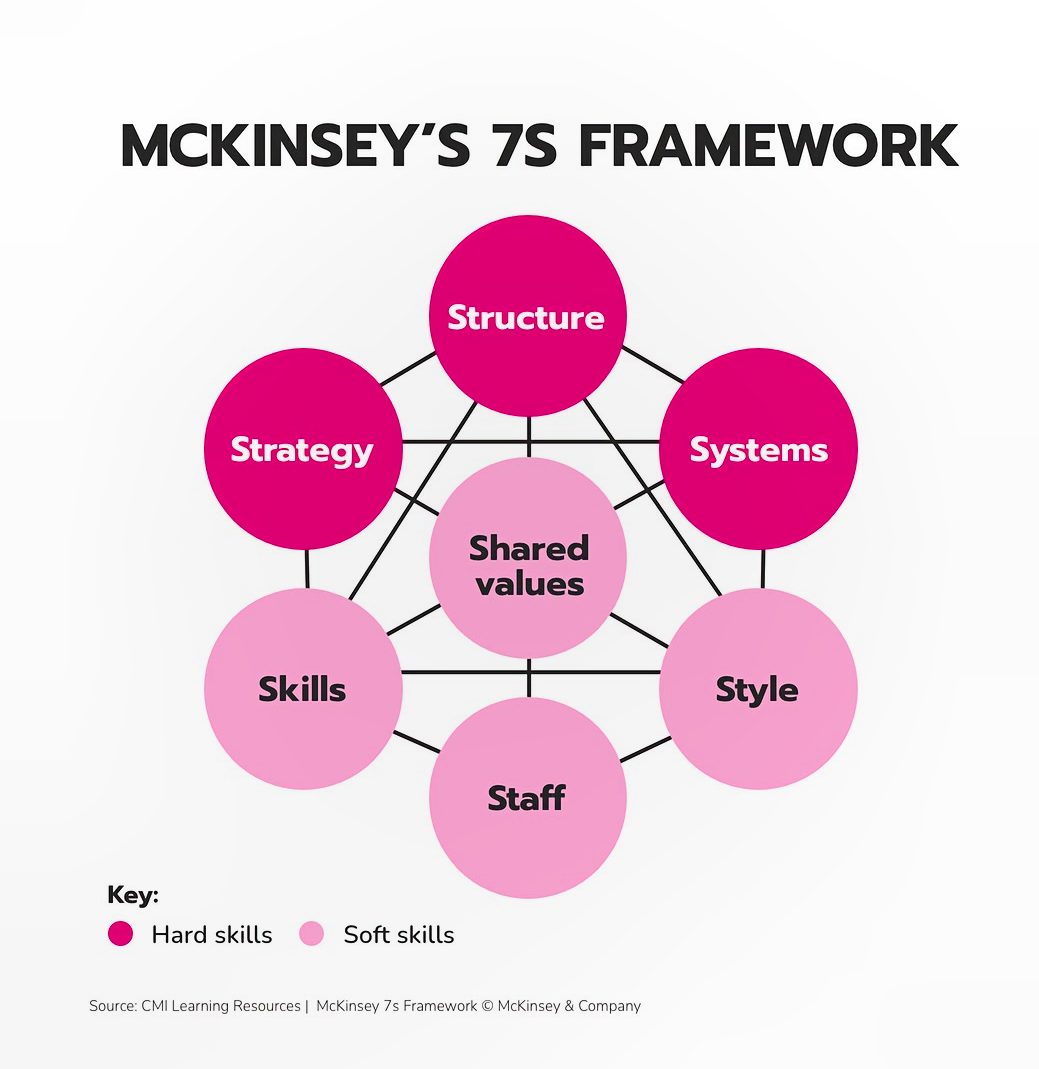
The McKinsey 7S Framework makes this point plainly.
It sets out that organisations only work when key elements align.
Strategy, structure, and systems on one side.
Style, staff, skills, and shared values on the other.
Leadership sits right in the middle of that.
Not as a concept ,As a lived behaviour and your “style” is not what you write down.
It is how your decisions, your standards, and your behaviours are felt through your systems and your structure.
That is where operations comes in.
If you tell me you are a clear leader, I will look at your operation.
Are priorities understood at every level?
Do people know what matters this week?
Is ownership obvious?
If not, the leadership is not clear.
If you tell me you empower people, I will look at decision-making.
Are decisions made at the right level?
Or do things drift upwards and stall?
If everything comes back to you, empowerment is not happening.
If you tell me you are commercially minded, I will go to the floor.
Are teams confident talking about income?
Do they understand what drives performance?
Is it visible day to day?
If not, it is not embedded ,this is not about catching people out .
It is simply about being honest.
One thing I see often is strong strategy, but weak alignment.
The intent is there ,the language is right and the structure and systems do not back it up.
That is where the 7S model is useful.
It forces a simple question:
Does the way we are set up actually support what we say we are trying to do?
If your strategy says “one team”, but your structure keeps teams apart, it will not land.
If your strategy says “commercial focus”, but your systems do not track performance daily, it will not land.
If your strategy says “high standards”, but poor delivery is left alone, it will not land.

Leadership is the job of closing that gap.
This is where role modelling comes in.
You cannot delegate leadership style ,You demonstrate it.
People watch what you do far more than what you say.
If you talk about standards, but walk past poor delivery, that is the real message.
If you talk about collaboration, but allow silos to sit, that is the real message.
If you talk about commercial discipline, but avoid hard financial decisions, that is the real message.
It is simple as your behaviour sets the tone.
And in operations, it is visible straight away.
Consistency matters more than anything.
Visitors expect it and your Teams rely on it.
A strong day followed by a weak one is not good enough.
And consistency does not come from good intent.
It comes from discipline.
Clear expectations ,Simple routines ,Visible measures and Early intervention when things slip
That is leadership made practical ,Not big speeches ,

Daily grip.
Decision-making is another place this shows up.
If everything sits at the centre, pace slows.
If no one knows what they own, nothing moves.
You have to be clear:
What is owned at venue level or what sits centrally and when things need escalating
And then you stick to it.
If you override it every time pressure builds, people stop trusting the system.
They wait instead of acting.
That is how operations stall.
Commercial thinking is no different.
It does not sit in a separate team.
It lives in the operation.
On the floor.
In how products are presented ,In how staff engage visitors and of course how confident teams are at the point of sale.
If leaders treat it as separate, it never embeds.
If leaders talk about it, measure it, and act on it, it becomes normal.
Again, it comes back to role modelling.
At its simplest, this is about alignment.
The McKinsey 7S Framework gives you the structure.
But it is leadership that makes it real ,You align what you say with how you operate and align your systems with your standards.
You align your structure with your intent.
And you hold it …Steadily.
I will leave you with this …
Walk your operation.
Properly.
Look at it as if you were seeing it for the first time.
What do you notice?
Where does it feel sharp?
Where does it feel loose?
And then ask yourself:
Is this what my leadership looks like in practice?
Because whether you like it or not, that is your answer.
